Information checked October 26, 2026. Payment methods, cancellation steps, discounts, refund rules, renewal notices, and applicable laws vary by company, service, account, and state. Confirm the current terms in your own account.
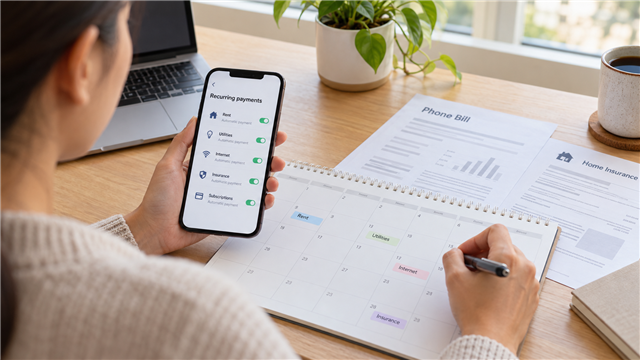 |
| AutoPay can handle a payment, but it does not replace reviewing the bill, funding source, and service terms. |
Our U.S. phone service and insurance are both set to AutoPay, so the charges go to a card automatically. That has been convenient, and we have not had a problem with those two payments. But a free one-month trial of an AI service taught me that AutoPay and auto-renewal are not the same thing.
I signed up for the free trial, did not cancel before it ended, and was surprised when it automatically changed into a paid subscription. I canceled after seeing the charge. The experience was a useful reminder: “free for one month” often describes only the first billing period, not a service that stops automatically.
AutoPay, recurring card charge, and auto-renewal
| Term | What continues | Typical example | Main question |
|---|---|---|---|
| AutoPay | Automatic payment of an amount due | A monthly phone or insurance bill is charged to a saved card | Which amount, date, and payment method will be used? |
| Recurring card payment | Permission for a merchant to charge a card repeatedly | A monthly software membership charges the card on file | Did I authorize future charges, and how do I revoke them? |
| Automatic bank debit | A company withdraws money from a checking or savings account | A provider uses account and routing information each month | Is there enough money, and how can authorization be revoked? |
| Auto-renewal | The subscription or contract continues into another paid period | A free trial becomes a monthly paid AI subscription | When must I cancel to prevent the next renewal? |
A single service can use more than one of these features. A subscription can auto-renew, and the resulting charge can be paid automatically with the saved card. That is why pressing one “off” switch may not end every part of the arrangement.
Why our phone and insurance AutoPay feel simple
For our phone service and insurance, the service already exists and a bill becomes due. AutoPay handles the payment step by charging the card on file. It reduces the risk of forgetting a due date, but it does not guarantee that the amount is correct or that the card will always work.
Before relying on AutoPay, check the payment date, amount setting, funding method, card expiration date, and confirmation process. Some providers offer a discount only with qualifying plans or payment methods. Changing from a bank account to a credit card—or changing cards—may affect that discount under the provider’s current terms.
Our first U.S. phone-bill guide explains why the amount shown in an app can differ from the monthly price remembered from a store. AutoPay does not correct an unexpected plan charge, add-on, tax, or delayed promotional credit; it simply pays according to its settings.
Why a free trial can become a paid subscription
The Federal Trade Commission warns that many free trials require payment information and charge the customer if the trial is not canceled before it ends. The important details are the trial length, the exact cancellation deadline, the price and frequency after the trial, and the cancellation method.
In my case, the AI service was free for one month and then renewed automatically. I had understood the free period, but I had not treated the end date as a payment deadline. When the charge appeared, I was surprised and canceled the subscription. I am not claiming the company charged without permission or that I received a refund; the lesson is that I should have recorded the conversion date when I enrolled.
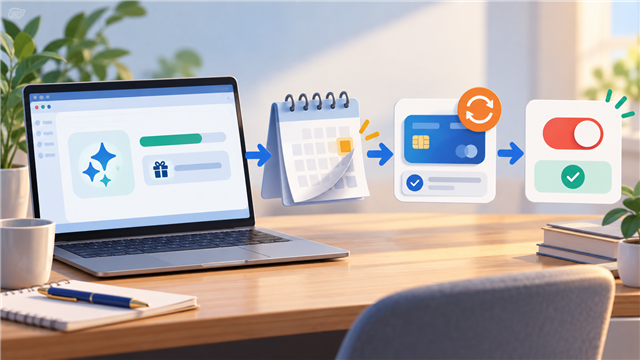 |
| A free trial may convert to a paid plan unless it is canceled before the deadline stated in the offer. |
A free-trial checklist before entering a card
- Find the exact end date and time. “One month” may not mean the final calendar day of the next month.
- Find the post-trial price. Check the amount, billing frequency, taxes, and whether an introductory rate later changes.
- Read the cancellation deadline. Some services require cancellation before the renewal date, not after the charge posts.
- Locate the cancellation path now. Confirm whether cancellation occurs in the service, an app store, or the platform used to subscribe.
- Save the offer. Keep a screenshot or email showing the trial, renewal terms, and cancellation instructions.
- Create two reminders. Set one several days before renewal and another on the day you plan to decide.
- Review the confirmation. A deleted app or closed browser tab is not proof that a subscription was canceled.
Canceling AutoPay does not necessarily cancel the service
This is the most important distinction. If you turn off automatic payment for a phone plan, insurance policy, loan, or other contract, the bill may still be owed. The company may expect a manual payment, and missing it can lead to fees, interruption, cancellation, or other consequences under the agreement.
The CFPB similarly explains that stopping an automatic bank payment does not cancel the underlying contract or debt. To end a service, follow the provider’s actual cancellation procedure. If you only want to change the payment method, say that clearly rather than asking to cancel the account.
Canceling a subscription does not always reverse the last charge
A service may cancel immediately, remain available until the paid period ends, or follow another policy. A cancellation confirmation can prove that future renewal was stopped, but it does not automatically show that the most recent charge was refunded.
After canceling, save the confirmation screen and email. Write down whether access ends immediately or on a specified date. Then check the next statement to make sure another charge does not appear.
If a charge looks unfamiliar, first identify the merchant description and the account used to subscribe. Purchases made through an app marketplace may need to be managed through that marketplace rather than directly through the app developer. Our credit-card statement guide explains how to review merchant names, transaction dates, balances, and billing disputes.
If you cannot remember which platform manages a recurring plan, follow our step-by-step guide to finding and canceling forgotten subscriptions through statements, receipts, app stores, and account settings.
What to do when a company keeps charging
- Follow the company’s official cancellation instructions.
- Save screenshots, confirmation numbers, emails, and the date of every contact.
- Check whether you canceled only AutoPay or the actual subscription.
- Contact the company using its official website, app, statement, or card record.
- If charges continue after cancellation or were not authorized, contact the card issuer or bank promptly and ask about its dispute procedure.
- Continue paying legitimate, undisputed bills on time.
For automatic withdrawals from a bank account, the CFPB says consumers can revoke authorization and may also contact the bank or credit union about stopping payments. A financial institution may charge for a stop-payment order. Revoking the debit still does not erase a valid contract or amount owed.
For card billing problems, dispute deadlines and procedures matter. Do not wait for several more renewals while assuming the first email solved the problem. Use the contact information on the official statement or the back of the card—not a link in a suspicious renewal message.
Fake renewal notices are another risk
The FTC warns that scammers send renewal messages for subscriptions people may not even have. A genuine reminder for a service already set to renew should not need you to re-enter card information through an unexpected message.
Instead of clicking an email or text link, open the provider’s known app or type its official address yourself. Check the account’s subscription page. If no matching service exists, do not call the phone number or provide payment information from the message.
A monthly recurring-payment review
| Check | Question | Possible action | Evidence to keep |
|---|---|---|---|
| Amount | Did the price, tax, discount, or plan change? | Compare the current bill with the prior one | Bill and offer terms |
| Date | When will the charge or debit occur? | Maintain funds or change the method early | AutoPay schedule |
| Need | Do I still use this service? | Cancel through the correct account before renewal | Cancellation confirmation |
| Payment method | Is the saved card or bank account current? | Update it and check whether a discount changes | Payment confirmation |
Keep enough money available for scheduled charges and maintain a buffer for variable bills. Recurring electronic payments can contribute to overdrafts or returned-payment consequences. Our common U.S. bank-fee guide explains why recurring payments need monitoring even when debit-card overdraft coverage is declined.
What I would do differently
I would still use AutoPay for regular phone and insurance bills because it has worked conveniently for us. But I would not treat AutoPay as permission to ignore the statements. I would check the amount and successful payment each month.
For a free trial, I would make the cancellation decision before entering the card. I would record the exact renewal date, post-trial price, and cancellation path, then save the cancellation confirmation if I decided not to continue. That small routine would have prevented the surprise I experienced with the AI service.
Frequently asked questions
Does turning off AutoPay cancel my phone plan?
Usually it changes only the payment method. The service and amount owed may continue. Check the provider’s account and cancellation terms.
Will a free trial stop automatically?
Do not assume it will. Many trials convert to paid subscriptions unless canceled by the stated deadline.
Does deleting an app cancel its subscription?
Not necessarily. Cancel through the service or marketplace that manages the subscription and save confirmation.
Will cancellation automatically refund the renewal charge?
Not necessarily. Refund eligibility depends on the offer, cancellation timing, provider policy, and applicable law. Ask separately about cancellation and refund status.
Should I remove my card after canceling?
First confirm that the subscription is canceled and save evidence. Removing a card is not a substitute for following the cancellation process, and some accounts may not allow removal while an obligation remains.
Official sources
- FTC: Free trials, auto-renewals, and negative-option subscriptions
- CFPB: How to stop automatic payments from a bank account
- CFPB: Bank-account payment terms
- FTC: Using credit cards and disputing charges
- FTC: Sample letter for disputing credit and debit card charges
This article provides general educational information, not individualized financial, insurance, legal, or contract advice. Your agreement, bill, cancellation confirmation, provider policy, payment method, and applicable law control your situation.