 |
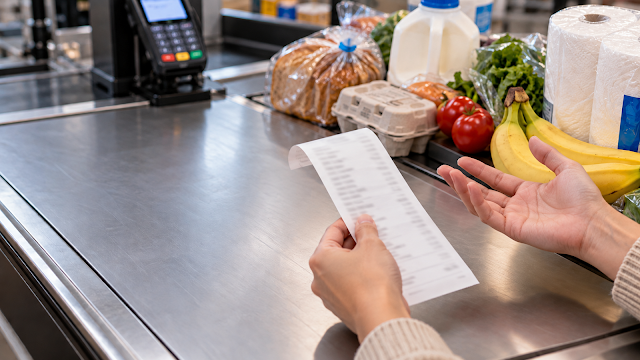
U.S. shelf prices often exclude sales tax, which is added at checkout. |
Information checked on September 30, 2026. Sales-tax rates and product exemptions vary by state and local jurisdiction.
When our household first started shopping in the United States, the number at the register often felt higher than expected. It happened at Walmart, Costco, Trader Joe’s, Whole Foods, and other stores while we were buying groceries and everyday household items.
We usually had a rough total in mind, but the amount on the payment screen was higher. It was confusing. We wondered why it kept happening, but it always felt easier to pay and move on than to stop and research it.
If this has happened to you, the most common explanation is simple: the price displayed on a U.S. shelf usually does not include sales tax. The tax is calculated and added when you check out. However, tax is not the only possible reason, so it is worth knowing how to read the total.
For a line-by-line way to identify which item, coupon, tax, deposit, or fee changed the total, use our guide to reading a U.S. store receipt.
Why U.S. shelf prices usually exclude sales tax
The United States does not use one nationwide retail sales-tax rate. Sales taxes are generally imposed at the state and local levels. Depending on where you shop, the final rate may combine state, county, city, and special-district taxes.
That means the same item can have a different final price in two nearby places. Online orders may also use the tax rules for the delivery location. Because the applicable rate depends on the location and the type of purchase, retailers commonly show the base price first and calculate the tax at checkout.
A simple checkout example
Suppose a taxable household item has a shelf price of $50.00 and the applicable combined sales-tax rate is 8.5%. This is only an example rate, not a nationwide rate.
If you mentally added only the shelf prices, the extra $4.25 can feel like an unexpected charge. On a larger shopping trip, the difference is more noticeable.
| Taxable subtotal | Example rate | Estimated tax | Estimated total |
|---|---|---|---|
| $10.00 | 8.5% | $0.85 | $10.85 |
| $50.00 | 8.5% | $4.25 | $54.25 |
| $100.00 | 8.5% | $8.50 | $108.50 |
Important: Use your actual local rate when estimating a purchase. The examples above are for demonstration only.
Why the tax can look different from one purchase to another
1. Rates vary by location
Your total may include more than one layer of tax. A city on one side of a county line may have a different combined rate from a nearby city. Even within one state, the final percentage can vary by address.
The safest way to check a current rate is through your state revenue or taxation department. The Streamlined Sales Tax state table links to state revenue departments and tax-rate tools.
2. Not every product is taxed the same way
Groceries, prepared meals, clothing, medicine, household supplies, alcohol, and other products may be treated differently. The rules depend on the state and sometimes the local jurisdiction.
For example, a package of uncooked food and a hot prepared meal may not receive the same tax treatment. A cart containing food plus paper towels, cleaning products, or personal-care items can therefore have a tax amount that is difficult to estimate just by looking at the subtotal.
This is one reason our totals at grocery stores did not always change by the same percentage. What was in the cart mattered, not just where we shopped.
3. A coupon or loyalty discount may apply differently than expected
A shelf sign may require a store account, digital coupon, minimum quantity, or specific product size. If the discount was not activated or the wrong variation was selected, the register may charge the regular price.
Before assuming the difference is tax, check whether the expected discount appears on the receipt.
If the cashier asks for your number, it may be used to find your loyalty account. Learn why U.S. stores ask for your phone number at checkout and how to respond.
For meat, produce, and other products sold by weight, the displayed number may be a rate per pound rather than the total price of one package. See our guide to how price per pound differs from the total meat package price.
4. Deposits and local fees may be added
Depending on the location and purchase, a receipt may include bottle deposits, bag charges, delivery charges, recycling fees, or other required amounts. These are separate from ordinary sales tax and should usually appear as separate lines.
5. The shelf label and register price may not match
Sometimes the issue is a genuine pricing error: an old sale tag remained on the shelf, the label belonged to a different size, or the register had not been updated. This is different from sales tax.
Pricing and refund rules vary by state and locality. If the item price itself is wrong, politely show the shelf label or sale advertisement to the cashier or customer-service desk. Keep the receipt and, when practical, take a clear photo of the label showing the product description and date.
How to read a U.S. store receipt in 30 seconds
- Item prices: Confirm expensive items and sale prices first.
- Discounts: Look for coupons, membership savings, and promotions.
- Subtotal: This is generally the amount before tax and certain additional charges.
- Tax: Some receipts show one tax line; others use product-tax codes or multiple lines.
- Deposits or fees: Check for bags, bottles, delivery, or other local charges.
- Total: This is the amount actually charged to your payment method.
Receipt abbreviations differ by store. If a tax code or fee is unclear, ask customer service while the purchase is still easy to review.
What to do when the total still seems wrong
- Compare the item price, not only the final total. Separate ordinary tax from an incorrect scanned price.
- Check the conditions on the shelf sign. Look for dates, sizes, quantities, and membership requirements.
- Save the receipt. It is much easier to explain the problem with the transaction details available.
- Start with the store. The Federal Trade Commission recommends contacting the seller first and bringing receipts or other documentation.
- Escalate only when necessary. If a serious problem remains unresolved, your state consumer-protection office or attorney general may offer guidance.
Stay calm and be specific: “The shelf label showed $12.99, but the item scanned at $15.99. Could you please check the price?” That is clearer than saying only that the entire bill seems too high.
A practical way to budget before checkout
For a quick estimate, multiply the taxable portion of your cart by your combined local rate, then add the result to the subtotal:
If you do not know which products are exempt, use a small buffer instead of expecting an exact mental total. After a few shopping trips, your receipts will show how your area and usual purchases are treated.
We eventually stopped treating the shelf-price total in our heads as the final amount. That small adjustment made checkout less surprising—and reading the receipt helped us tell the difference between normal tax and an actual pricing problem.
Frequently asked questions
Is sales tax included in U.S. shelf prices?
Usually, no. Most retailers display the price before applicable sales tax and add the tax at checkout. There can be exceptions, so check the sign, receipt, or seller’s terms.
Does every state charge the same sales tax?
No. Rates and taxable products vary. Local taxes can also change the combined rate within the same state.
Are groceries always tax-free?
No. Grocery taxation varies by state and locality, and prepared food may be treated differently from food purchased for home preparation.
Is a higher checkout total always caused by tax?
No. Check for missed discounts, product-size differences, deposits, fees, and shelf-label errors. The receipt should help identify the source of the difference.
Related newcomer guides
- 12 Hidden Costs of Living in the U.S.
- Where to Buy Groceries in the U.S.: A Newcomer’s Store-by-Store Guide
- Aldi vs Walmart: Which Is Cheaper for Everyday Groceries?
Sources and further reading
- Internal Revenue Service: Topic No. 503, State and Local General Sales Taxes
- Streamlined Sales Tax: State Revenue Department and Rate-Lookup Links
- Federal Trade Commission: What to Do When You Have a Problem With a Purchase
- USAGov: State Consumer Protection Offices
This article provides general educational information, not tax or legal advice. Check your state and local government sources for rules that apply to your purchase.