 |
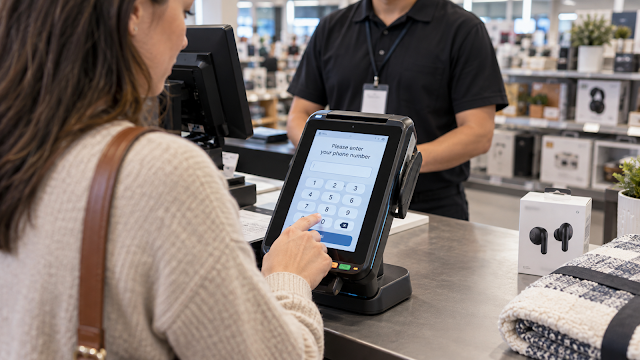
| Phone-number requests are common at many U.S. retail checkouts, but the reason is not always explained. |
If you are new to the United States, a simple question at the checkout counter can feel unexpectedly confusing:
“What’s your phone number?”
Our household remembers being asked for a phone number while buying electronics or household items. The surprising part was not the question itself. It was not knowing whether the number was actually required to complete the purchase or whether it was simply connected to a store account.
In most cases, the cashier is trying to find a loyalty account, attach the purchase to your history, or offer a digital receipt. However, the exact reason varies by store and transaction. Here is how to understand the request—and how to respond without feeling pressured.
Why do U.S. stores ask for your phone number?
A phone number gives a retailer a convenient way to identify a customer without asking for a physical membership card. Depending on the store, entering it may do one or more of the following.
1. To find your loyalty or rewards account
Many U.S. retailers operate free loyalty programs. Your phone number may function like an account ID, allowing the register to apply member prices, digital coupons, points, or other benefits.
This does not necessarily mean that entering any phone number will produce a discount. The number usually must already be registered with that store, and some offers must be activated in the store’s website or app before checkout.
2. To connect the purchase to your receipt history
A retailer may use the number to attach an in-store purchase to your online account. This can make it easier to find a receipt or start a return later. For example, Best Buy says it can look up a member’s receipt using a phone number, email address, or membership ID. Target also explains that entering a phone number registered with its loyalty program can make an eligible transaction available in the customer’s purchase history.
This can be useful when buying electronics, appliances, or other items for which you may need proof of purchase later.
3. To send a digital receipt or order update
Some stores offer electronic receipts by text or use a phone number for pickup, delivery, installation, repair, or order-status messages. In these situations, the number may be needed for the service you selected even if it would not be needed for a basic walk-in purchase.
4. To personalize offers and marketing
A phone number can also help a retailer connect your identity with your purchase history. That information may be used to personalize coupons, promotions, and advertising. The Federal Trade Commission notes that shopping services may collect contact details and information about what, when, and how customers buy. The FTC recommends checking the company’s privacy policy to understand how the information is used and shared.
In other words, the convenience of easier receipts and discounts may come with a privacy trade-off.
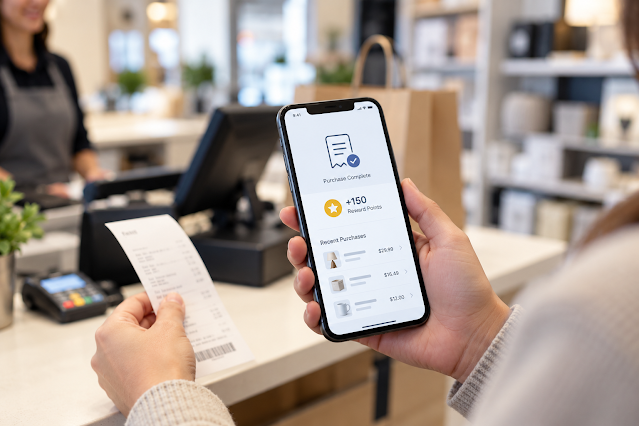 |
| A phone number may connect purchases to digital receipts, reward points, and an online account. |
Is giving your phone number required?
There is no single answer for every U.S. retailer or every type of purchase. A prompt appearing on the register does not, by itself, explain whether the number is required.
For many ordinary purchases, the phone-number screen is simply asking whether you want to use a loyalty account, and the cashier can skip it. A number may be necessary, however, when you choose a service such as delivery, pickup, installation, financing, repair, an account-based warranty plan, or text notifications.
The easiest solution is to ask what the number is for before providing it.
“Is it required to complete the purchase, or is it only for the rewards program?”
If it is only for rewards and you do not want to join, you can decline. If it is required for a particular service, you can decide whether that service is worth sharing the information.
What can you say at the checkout?
You do not need a long explanation. These short responses sound natural in the United States:
- “No, thank you.”
- “I’d rather not provide it.”
- “Is it required for the purchase?”
- “Is that for the rewards program?”
- “Can I check out without creating an account?”
- “Can I get a paper receipt instead?”
A cashier may be following an automatic prompt from the register, so a calm, simple answer is usually enough.
When sharing your number may be useful
Providing a phone number can be worthwhile when you regularly shop at the store and understand the program. Possible benefits include:
- member-only prices or digital coupons;
- reward points or purchase-based benefits;
- easier receipt lookup and returns;
- order, pickup, delivery, or repair notifications; and
- access to purchase history for expensive items.
Before joining, check whether the program is free, whether discounts are automatic, and whether marketing texts are optional. Do not assume every request at checkout provides an immediate discount.
When you may prefer to decline
You may decide not to provide the number if you rarely shop at the store, do not want another account, or are uncomfortable connecting your contact information to your purchases.
This matters because loyalty programs can involve more than collecting points. California’s attorney general, for example, has specifically warned that phone numbers entered for discounts can become part of the personal information collected through loyalty programs. Privacy rights vary by state, so the safest practical habit is to understand the program before joining it.
If you receive marketing messages you did not expect, review the retailer’s account and communication settings. The FTC also provides information about unwanted calls and texts, including the National Do Not Call Registry and ways to report spam.
A simple decision checklist
| Ask yourself | Why it matters |
|---|---|
| Is this required for the purchase? | It may only be an optional loyalty prompt. |
| Will I receive a discount today? | Some programs require registration or activated offers. |
| Will this help with a receipt or return? | Purchase history can be useful for expensive items. |
| Am I agreeing to marketing messages? | Check the sign-up screen and communication settings. |
| Do I shop here often enough to benefit? | An account may not be worth creating for one purchase. |
The bottom line
When a U.S. cashier asks for your phone number, do not panic and do not assume you must provide it immediately. The request is often related to a rewards account, digital receipt, purchase history, or marketing—not the payment itself.
Ask why the number is needed, consider the benefit, and decide whether you are comfortable sharing it. A simple “No, thank you” or “Is it required?” is completely normal.
If other parts of American checkout culture are unfamiliar, read why the price at checkout can be higher than the shelf price. You can also compare shopping options in our U.S. grocery store guide and our practical look at Aldi versus Walmart.
Information checked October 1, 2026. Store programs and privacy rules can change, and policies vary by retailer and state.